
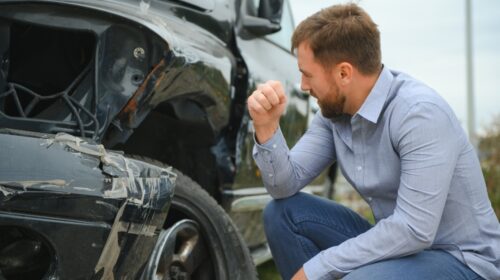
Road rage leaves more than damaged vehicles behind. It often leaves unanswered questions, conflicting stories, and a trail of missing details that can be difficult to piece together. A collision caused by aggressive driving may seem straightforward at first, yet proving that anger or hostility played a role is often much harder than people expect.
That difficulty becomes important in situations involving compensation for road rage accidents, where establishing what happened before the collision can matter just as much as the crash itself. The challenge is that many of the most important facts exist outside the impact scene. That is where the real story often begins.
Aggressive Behavior Is Not Always Captured on Camera
One of the biggest challenges is the lack of video evidence. Road rage incidents often begin long before a collision occurs, and many of those actions happen outside the view of traffic cameras.
A driver may tailgate another vehicle, make threatening lane changes, or engage in aggressive driving behavior for several minutes before the crash. By the time a collision happens, there may be little or no footage showing the actions that led to it.
Without video evidence, investigators are often left trying to reconstruct events using other sources of information, which can make the process more difficult.
Witnesses May Only See Part of the Incident
Road rage situations rarely unfold in one location. They often develop over several streets, intersections, or stretches of roadway before ending in a collision.
Because of this, witnesses may only see a portion of what happened. One person may observe aggressive driving but miss the crash itself. Another may see the collision but have no knowledge of the behavior leading up to it.
This creates a challenge because every witness may hold only one piece of a much larger puzzle. Investigators must then compare different accounts and determine how those pieces fit together.
Driver Intent Can Be Difficult to Prove
A crash does not automatically prove road rage. Many traffic collisions involve mistakes, distractions, or poor judgment that have nothing to do with aggressive behavior.
The challenge is showing that the actions before the collision were intentional or driven by anger rather than ordinary driving errors. This distinction can be important in cases involving accident and injury law, where understanding the circumstances surrounding a crash often requires looking beyond the impact itself.
Without clear evidence of aggressive conduct, proving road rage can become much more complicated than proving a standard traffic accident.
Physical Evidence May Not Tell the Whole Story
Vehicle damage can reveal a great deal about how a collision occurred. It may show the direction of impact, the force involved, and the positions of the vehicles.
What it often cannot show is the reason behind the crash.
Road rage behaviors such as brake checking, intimidation, aggressive following, or repeated attempts to provoke another driver may leave little physical evidence behind. Investigators may see the result of the collision but struggle to identify the behavior that caused it.
That gap between cause and evidence is one of the reasons these cases can be difficult to establish.
Important Evidence Can Disappear Quickly
Time can become another challenge. Some of the most valuable evidence in road rage investigations may not remain available forever.
Examples include:
- Traffic camera footage
- Dashcam recordings
- Security camera video
- Electronic vehicle data
Many recording systems automatically overwrite older files after a certain period. If evidence is not preserved, important details about the incident may disappear before they can be reviewed.
As a result, investigators may have fewer resources available to help reconstruct what happened.
Conflicting Accounts From Drivers
People involved in the same event do not always describe it the same way. This is especially common in road rage accidents.
One driver may claim the other acted aggressively throughout the encounter. The opposing driver may deny those allegations and provide a completely different version of events. Both accounts can sound convincing, which makes determining the truth more challenging.
Investigators often have to compare statements with physical evidence, witness accounts, and available recordings to understand which details align with the facts.
Road Rage Often Begins Before the Crash Scene
Many road rage incidents start far from the location where the collision ultimately occurs. A disagreement between drivers may begin several miles earlier and continue through multiple traffic conditions.
The problem is that evidence from those earlier interactions is often limited. There may be no witnesses, no cameras, and no documentation showing how the situation developed.
Without information about those earlier events, investigators may struggle to understand the full sequence of actions that led to the crash.
Multiple Pieces of Evidence Must Work Together
Unlike some accidents where one piece of evidence provides a clear answer, road rage cases often depend on combining many different sources of information.
Investigators may need to compare witness statements, police reports, video footage, electronic records, and physical evidence before a complete picture begins to emerge. No single source usually tells the entire story.
The challenge is connecting those separate pieces into a timeline that accurately reflects what occurred before, during, and after the collision.
Conclusion
Road rage accidents can be difficult to prove because the most important details often happen before the actual impact. Missing video footage, partial witness observations, conflicting driver accounts, limited physical evidence, and disappearing records can all create obstacles during an investigation. Events that begin miles away from the crash scene may hold some of the most important answers, yet those details are often the hardest to document. These challenges help explain why cases involving compensation for road rage accidents frequently require a close examination of the entire chain of events rather than the collision alone.